
Madera Root Zone Calculation for TPZ Fencing Compliance
Proper root zone calculation is critical for TPZ fencing compliance in Madera, especially in neighborhoods like Downtown Madera and The Eastside. With Timber City Temp Fence, ensure your project meets local regulations while protecting Madera's historic trees. Our expertise accounts for Madera's climate—94 days above 90°F—and low flood risk, providing accurate CRZ measurements for your fencing needs.
Root Zone Calculation for TPZ Fencing in Madera
- We confirm trunk location and canopy edge before the first panel goes in.
- We set the TPZ line to protect roots from compaction, trenching, and stockpiles.
- We use tree protection zones hardware with zero-trip hazard details when foot traffic runs close.
Calculation Steps
- We map the root spread first, because TPZ fencing lives or dies on how far the roots actually run from the trunk.
- We size the fenced zone around the tree protection zone, then we adjust for grade breaks, existing pavement, and access lanes so the fence doesn’t pinch the root area.
- We use our wind-load resistance hardware and concrete steel bases when the site sits open to Madera heat and summer gusts.
- We keep the line tight and visible with dust control mesh when grading dust or traffic dust starts creeping into the root area.
- We tie the layout back to local conditions in Westside / Lincoln Park, The Eastside, and The Eastside so the fence matches the job instead of fighting it.
| TPZ factor | What we check | Why it matters |
|---|---|---|
| Root spread | Trunk center, canopy edge, and dripline clues | Sets the fenced boundary around the real protected area |
| Site disturbance | Grading, staging, access paths, and equipment turns | Prevents compaction and accidental root damage |
| Local conditions | Heat, dust, wind, and open exposure in Madera | Keeps the TPZ line stable through the job |
| Fence hardware | Base weight, panel connection, and visibility | Helps the enclosure hold its shape and stay clear |
Root Zone Calculation for TPZ Fencing in Madera — Part 2
Root zone calculation for TPZ fencing in Madera requires measuring the tree's drip line, typically extending 1.5 feet per inch of trunk diameter. In The Eastside, soil compaction from foot traffic affects root health. Westside / Lincoln Park's older trees need wider TPZ fencing due to extensive root systems. Near Lions Town and Country Park, clay soil requires adjustments for water retention. Compliance ensures tree longevity and avoids penalties under local ordinances. Use TPZ fencing rentals for temporary projects. Refer to local tree ordinances for specifics. Riverview's low flood risk simplifies root zone mapping compared to other areas.
Key Terminology
- Tree Protection Zone
- Designated area around trees for root preservation.
- Drip Line
- Perimeter where water drips from tree branches.
- Critical Root Zone
- Area containing essential roots for tree stability.
- Root Spread
- Horizontal distance roots extend from tree trunk.
- Soil Compaction
- Compression reducing root oxygen and water access.
- TPZ Fencing
- Barriers preventing construction damage to roots.
In Simple Terms
Measure root spread to set TPZ fencing boundaries.
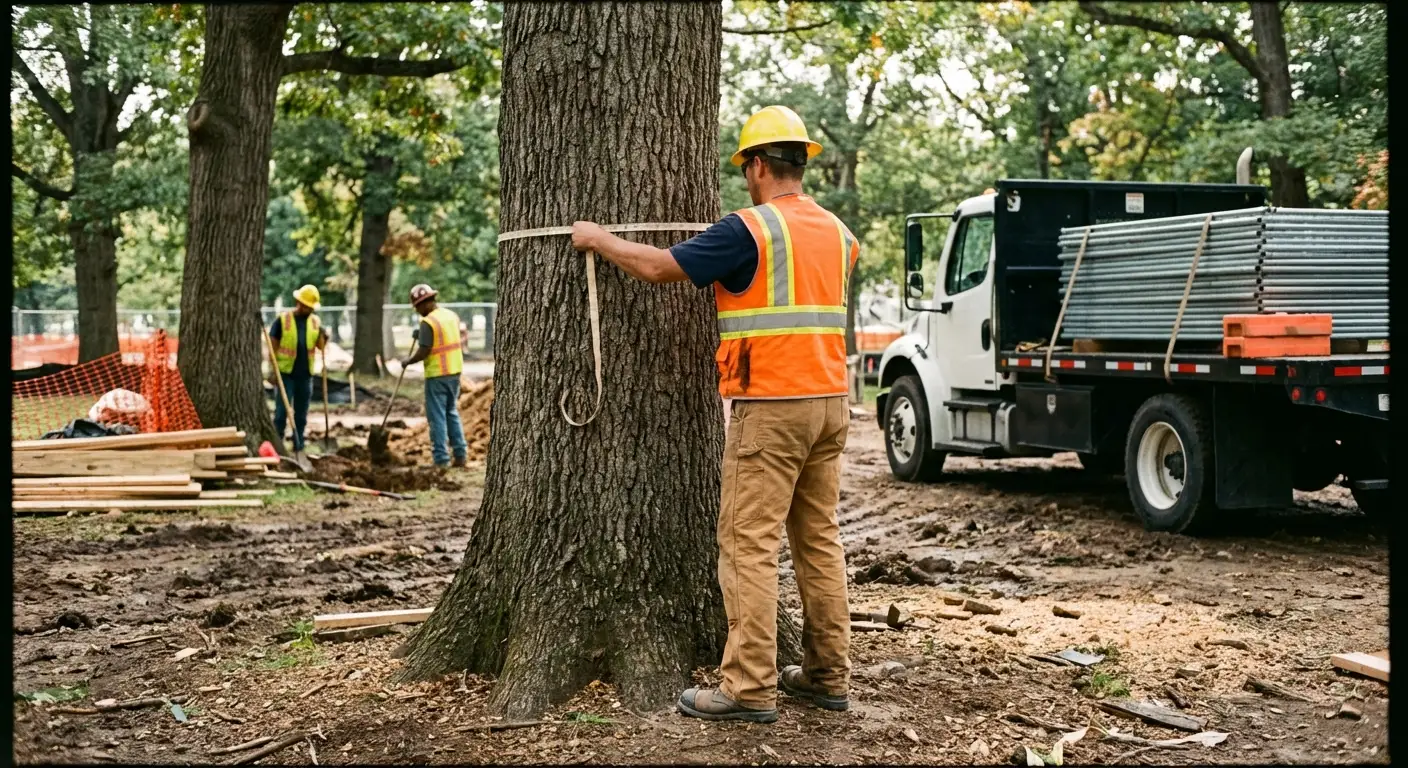
TPZ Root Zone Calculation for Temporary Fencing in Madera, CA
Use measured trunk diameter, root zone radius, and fence placement rules to protect trees during work in Madera neighborhoods.
| Root zone buffer | $180-$320 per tree |
|---|---|
| TPZ radius calculation | $140-$260 per tree |
| Fence panel layout | $12-$22 per linear foot |
| No-dig anchor system | $220-$480 per install |
| Root protection monitoring | $90-$180 per inspection |
| Temporary access gate | $260-$540 per gate |
| Signage Interval | Every 30 linear feet |
TPZ Fencing Compliance Services
Contact Madera contractors for root zone calculation and fencing.
Common Mistakes in Root Zone Calculation for TPZ Fencing
Root zone calculation for TPZ fencing in Madera requires precision to protect trees and meet regulations. Mistakes here risk fines, tree damage, and project delays. Here’s what trips up most crews on site.
Ignoring Soil Moisture Variations Around TPZ
Failing to account for soil moisture differences can lead to misjudging root spread, causing fence placement too close to roots and risking tree health and compliance violations.
Check soil moisture levels during measurement and adjust root zone radius accordingly to avoid root damage and stay compliant.
Using Standard Radius Without Site-Specific Adjustments
Applying a fixed root zone radius without considering tree species or local soil conditions often results in fences encroaching on critical root areas, harming trees and triggering regulatory issues.
Assess each tree individually for root spread based on species and local soil, adjusting root zone calculations on site.
Neglecting Local Climate Effects on Root Growth
Overlooking Madera’s hot, dry climate and low rainfall skews root zone sizing, risking overestimation and unnecessary fencing restrictions or underestimation causing root damage.
Factor in Madera’s climate data—high heat days and limited precipitation—when calculating the root zone to match real root distribution.
Failing to Mark TPZ Boundaries Clearly Before Installation
Without clearly marked root protection zones, crews place fencing improperly, leading to root injury and noncompliance penalties that slow down the project.
Use visible markers or flags around the TPZ before fence installation to guide precise placement and protect roots.
Overlooking Permitting and Tree Protection Ordinances
Skipping detailed review of Madera’s tree protection ordinances causes missed compliance requirements, resulting in fines and costly fence rework.
Review local tree protection guidelines thoroughly before calculating root zones and planning fence layouts.
Root Zone Calculation for TPZ Fencing: Precision That Respects Madera’s Trees and Rules
We believe temporary fencing shouldn’t compromise permanent landscapes. In Madera’s established neighborhoods—where mature trees anchor decades of community history—we design TPZ layouts that honor both regulatory boundaries and living root systems. Our crew treats every drip line like a property line: non-negotiable, precisely measured, and protected from day one.
-
Measure Twice, Install Once
We calculate root zone dimensions based on actual tree species, soil compaction, and local TPZ ordinances—not generic templates. This prevents over-excavation and keeps protected roots undisturbed during fence placement around sensitive zones.In PracticeOn a Westside job near Lincoln Park, we adjusted post spacing after identifying a mature sycamore’s drip line, avoiding root damage while meeting Madera’s tree protection rules.
-
Climate-Informed Anchoring
Madera’s 94 days above 90°F and dry, dusty soil demand deeper or reinforced bases to prevent shifting. We select anchoring methods that account for thermal expansion and low moisture retention in the topsoil layer.In PracticeUsing concrete-steel bases during a Downtown Madera civic project ensured stability despite summer heat cycles.
-
Neighborhood-Specific Layouts
Cul-de-sac-heavy developments from the 1980–2000 era create irregular lot shapes. We adapt TPZ fencing geometry to fit curved setbacks and narrow side yards common in areas like The Eastside.In PracticeWe deployed post-driven fence with custom angles around a heritage oak in an Eastside bungalow’s tight rear yard.
-
Compliance Through Documentation
We cross-reference Madera’s municipal tree ordinances with OSHA and EPA dust control expectations. Every layout includes a root zone buffer log that aligns with tree protection ordinances and SWPPP requirements.In PracticeFor a site near the Madera Drive-In Theatre, we integrated dust control mesh into the TPZ barrier to satisfy both air quality and root protection rules.
Timber City Temp Fence follows Madera’s tree protection standards to the letter, using field-verified root zone calculations—not estimates—to guide every TPZ installation across Downtown Madera, The Eastside, and Westside / Lincoln Park.
TPZ Fencing Root Zone Compliance in Madera
Field-tested solutions for tree protection zones in Madera's unique soil and climate conditions.
How does Madera's low flood zone affect TPZ fencing root zone calculations?
Madera's low flood zone status minimizes erosion risks, allowing standard root zone depth calculations without additional stabilization measures.
What tree species in Courthouse Park require specific TPZ fencing considerations?
Mature Valley Oaks in Courthouse Park need extended root zone buffers due to their widespread lateral root systems.
Does Sherwood Forest's clay soil impact TPZ fence post installation depth?
Sherwood Forest's dense clay requires augering pilot holes 6 inches deeper than standard to accommodate root zone expansion.
How do Eastside's historic district regulations modify TPZ fencing requirements?
Eastside's preservation codes mandate hand-digging within 5 feet of designated heritage trees to prevent root damage.
Why do Downtown Madera's sidewalk trees need specialized root zone protection?
Concrete confinement stresses root systems, requiring TPZ fences to extend 1.5 times standard distance from trunks.
What measurement method works best for TPZ calculations in Madera's 90°F summers?
Infrared soil moisture mapping avoids excavation damage during drought conditions common in Madera's summer months.
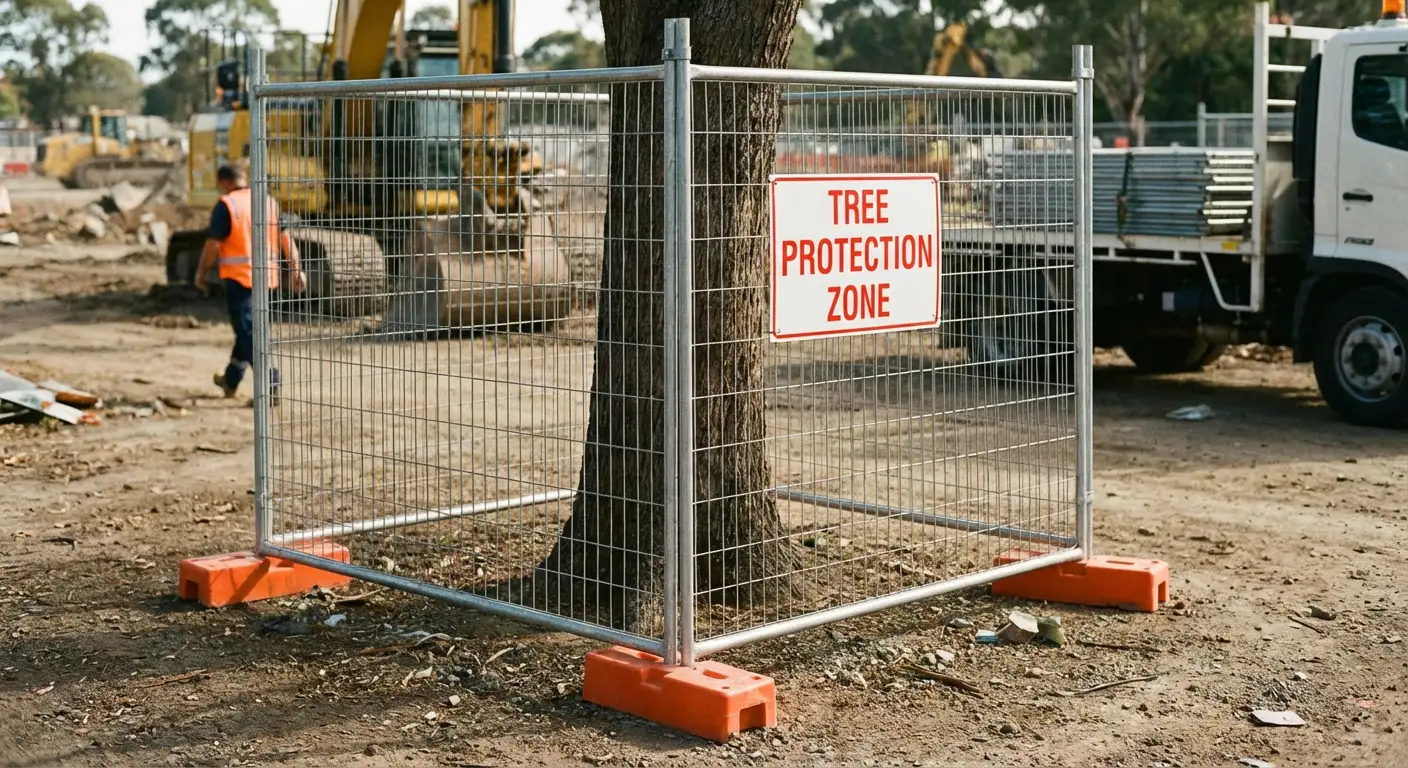
Root Zone Calculations for Secure TPZ Fencing
Professional technical guidance for precise temporary protection zone fencing requirements in agricultural and construction environments throughout Central California.
OSHA-aligned fencing solutions engineered for Madera region construction standards